



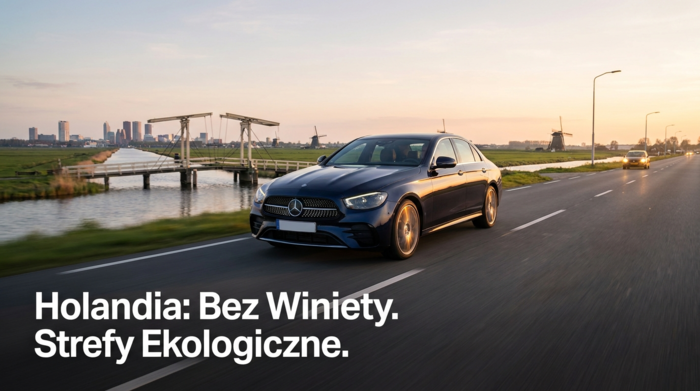
When planning a car trip to the Netherlands, many drivers wonder if they need a vignette, similar to other European countries. The question of vignette Netherlands often causes uncertainty, but for passenger cars, the answer is surprisingly simple. In this article, we will clarify all doubts regarding road tolls and ecological zones to ensure your journey is comfortable and free from unexpected surprises.
Whether you are planning a short-term trip or a longer journey through the Netherlands, understanding local regulations is crucial. Prepare for Dutch roads by using services from trusted companies. To learn more about our offer, visit our rental's homepage or check out available car rental options in Warsaw.
Vignette in the Netherlands for Passenger Cars – Dispelling Doubts
For passenger car drivers, the good news is that the Netherlands does not have a nationwide vignette system or general road tolls for using motorways or expressways. Unlike many European countries, when traveling by passenger car on most Dutch roads, you don't have to worry about buying a vignette. This significantly simplifies trip planning and helps avoid additional costs.
No Traditional Vignettes for Passenger Cars
The concept of vignette for the Netherlands or Netherlands vignette primarily refers to the historical Eurovignette system, which exclusively applied to heavy goods vehicles. Passenger cars, motorcycles, or campers with a permissible total weight of up to 3.5 tons are exempt from such tolls. Therefore, you can freely travel on the extensive road network of the Netherlands without having to purchase any vignette in advance.
What About Motorways and Expressways?
Most motorways (snelwegen) and expressways in the Netherlands are free for all vehicles. However, there are a few exceptions in the form of toll tunnels, which are clearly marked and charge a separate fee directly at the entrance or exit. Examples include the Westerschelde Tunnel and the Kiltunnel. Fees for passing through these facilities are usually small and apply to all types of vehicles. When planning your route, it's worth checking if your journey will include one of these exceptions. Traveling in a comfortable car, such as those available in the Comfort category in Warsaw or choosing trusted brands like Skoda from our fleet, allows you to focus on enjoying the drive.
Environmental Zones (Emission Zones) in the Netherlands – Key to Free Driving in Cities
Although the vignette Netherlands for passenger cars is a myth, there's another, much more important issue drivers must be aware of: environmental zones (milieuzones). These are areas in city centers where entry is restricted for vehicles with high exhaust emissions, aiming to improve air quality.
What are Environmental Zones and Where Can You Find Them?
Many Dutch cities, including Amsterdam, Rotterdam, Utrecht, and The Hague, have introduced environmental zones. These are clearly marked with "milieuzone" road signs and additional signs indicating the types of vehicles allowed to enter. These restrictions aim to remove the most polluting vehicles from circulation. It is important to remember that entering such a zone without authorization carries a high fine.
Which Vehicles Can Enter Environmental Zones?
For passenger cars, restrictions in environmental zones usually apply to older diesel vehicles that do not meet specific Euro emission standards (most commonly Euro 4 or Euro 5). Petrol cars (usually from Euro 1), hybrid, electric, and hydrogen vehicles are generally allowed to circulate. Regulations may vary depending on the city, so it's always worth checking the current rules for the specific location you are visiting. By renting an SUV in Warsaw or another modern model, for example, from the Volkswagen brand, you can be sure that the vehicle meets high emission standards, allowing free entry into most environmental zones.
How to Check if Your Car Meets the Standards?
Information about your vehicle's Euro standard can be found in its registration document. If you are renting a car, make sure that the chosen model meets the required standards. A modern fleet of cars usually meets these requirements without issue, which is another argument for choosing a rental for an international trip.
Road Tolls for Trucks in the Netherlands – Changes from 2026 (for a complete picture)
Although this article focuses on passenger cars, it's worth mentioning significant changes concerning vignette Netherlands truck and heavy goods vehicles in general. From July 1, 2026, the Netherlands will abolish the Eurovignette system for heavy goods vehicles with a permissible total weight exceeding 3.5 tons.
End of Eurovignette for Vehicles Over 3.5 Tons
The Eurovignette system, which required the purchase of a vignette Netherlands for trucks in the Netherlands (as well as in Luxembourg and Sweden), will be replaced by a new model. This change aims to introduce a fairer and more ecological toll system that will encourage carriers to invest in less emissive vehicles.
New Kilometre-Based Toll System – What Does This Mean?
From July 1, 2026, the Netherlands will switch to a mileage-based road toll system, similar to those already in place in Germany and Belgium. This means that carriers will pay for the actual kilometers driven, and rates will depend on the vehicle's CO2 emission class. Electric trucks will benefit from significantly lower rates, which is intended to accelerate the transformation of the transport fleet. These regulations do not apply to passenger cars, but it is worth knowing about them when planning international trips. More practical tips on preparing for international travel can be found in our article on renting a car for a vacation abroad.
Who Do These Changes Affect?
The new system will apply to all trucks with a permissible total weight exceeding 3.5 tons, regardless of their country of registration. From July 2026, every such vehicle entering the Netherlands will need to be equipped with a functional on-board unit (OBU) for automatic toll calculation.
Practical Tips for Drivers Traveling to the Netherlands
Traveling in the Netherlands is usually pleasant thanks to well-maintained roads and clear regulations. Here are some additional tips to help you fully enjoy your trip:
Documents and Mandatory Equipment
Ensure you have a valid driver's license, ID card or passport, vehicle registration document, and proof of insurance (a green card is not mandatory but recommended). Although the Netherlands does not have strict requirements for mandatory equipment like a first-aid kit or warning triangle for passenger cars, it's always advisable to carry them for your own safety.
Speed Limits and Traffic Rules
The Netherlands has strict speed regulations that are rigorously enforced. General limits are:
- 50 km/h in built-up areas.
- 80 km/h outside built-up areas.
- 100-130 km/h on motorways (often 100 km/h between 6:00 AM and 7:00 PM, 130 km/h outside these hours).
Always pay attention to road signs, which may indicate other, local restrictions. Adhering to regulations is key to avoiding fines; you can read more about this in our guide to the new fine tariff.
Parking in the Netherlands
Parking in Dutch cities can be expensive and difficult. It is advisable to consider using P+R (Park and Ride) car parks located on the outskirts of cities. They usually offer lower prices and convenient public transport connections to the city center. In some zones (so-called "blauwe zones"), a parking disc is required. Always check local signs and parking rules to avoid unpleasant surprises. Practical tips on parking regulations can be found in our article on sidewalk parking.
In summary, traveling to the Netherlands by passenger car is much simpler than it might seem in terms of road tolls. Focus on environmental zones and enjoy the freedom of driving on scenic Dutch roads.
Planning a trip to the Netherlands and need a reliable car? Choose comfort and safety by renting a vehicle from our fleet. We provide modern and regularly serviced cars that meet all standards. Discover the Netherlands worry-free by choosing the ideal car for your trip.
FAQ – Frequently Asked Questions
Do I need to buy a vignette for a passenger car in the Netherlands?
No, there is no nationwide vignette system for passenger cars in the Netherlands. Most roads, including motorways, are free. The only exceptions are a few toll tunnels.
What road tolls apply to passenger cars in the Netherlands?
For passenger cars, only tolls for passing through a few specific tunnels (e.g., Westerscheldetunnel, Kiltunnel) apply. Apart from these exceptions, roads are free.
What are environmental zones in the Netherlands and do they apply to cars from Poland?
Environmental zones (milieuzones) are areas in cities where entry is restricted for vehicles with high exhaust emissions. They apply to all vehicles, including those registered in Poland. Restrictions mainly concern older diesel cars.
Can a rented car enter Dutch environmental zones?
Yes, cars from modern rental companies, like ours, usually meet current emission standards, allowing free entry into most environmental zones in the Netherlands. However, it's always advisable to check the Euro standard of the rented vehicle.
What is Eurovignette and does it apply to passenger cars?
Eurovignette is a road toll system exclusively for heavy goods vehicles (above 12 tons, and from 2026 above 3.5 tons). It does not apply to passenger cars. From July 1, 2026, it will be replaced by a kilometre-based toll system for trucks in the Netherlands.
What are the speed limits in the Netherlands and are they strictly enforced?
Standard speed limits apply in the Netherlands (50 km/h in built-up areas, 80 km/h outside, 100-130 km/h on motorways), and they are very strictly enforced. It is always recommended to adhere to road signs.
Where can I check if my car meets the standards for Dutch environmental zones?
Information about your car's Euro standard can be found in the vehicle's registration document. You can also use official websites of Dutch cities or mobile applications dedicated to environmental zones.